

- All
- Product Name
- Product Keyword
- Product Model
- Product Summary
- Product Description
- Multi Field Search
Views: 0 Author: Site Editor Publish Time: 2026-10-14 Origin: Site

Ordering a 1U1857 unitooth requires more than matching a number on a supplier’s website. The replacement must suit the actual bucket, mounting interface and working conditions. For distributors, importers and maintenance teams, checking these details before ordering helps avoid purchasing the wrong configuration.
Start with the tooth type and installation position, then compare the bucket connection, dimensions and hardware. This guide explains what to check when sourcing a replacement and which details to include in an inquiry. Measurement and maintenance advice is general; final suitability depends on the confirmed specification.
The numbers 1U1857 and 1U-1857 are two written forms of the same reference. Caterpillar’s loader tip catalog identifies this reference as a J250 center unitooth. Its bolt-on design combines the working tip and mounting section in one piece, so a separate adapter is not required.
This distinction matters when searching for a 1U1857 bucket tooth. A removable tooth fitted onto an independent adapter is a different arrangement. The J250 label alone does not establish that the mounting interfaces are interchangeable.
Also distinguish center teeth from corner teeth. The catalog lists separate left- and right-hand corner references. A center-tooth listing should therefore not be used to order a complete bucket set without checking the positions required. Ask the supplier to identify each part on a bucket layout or a clear photograph before confirming quantities.
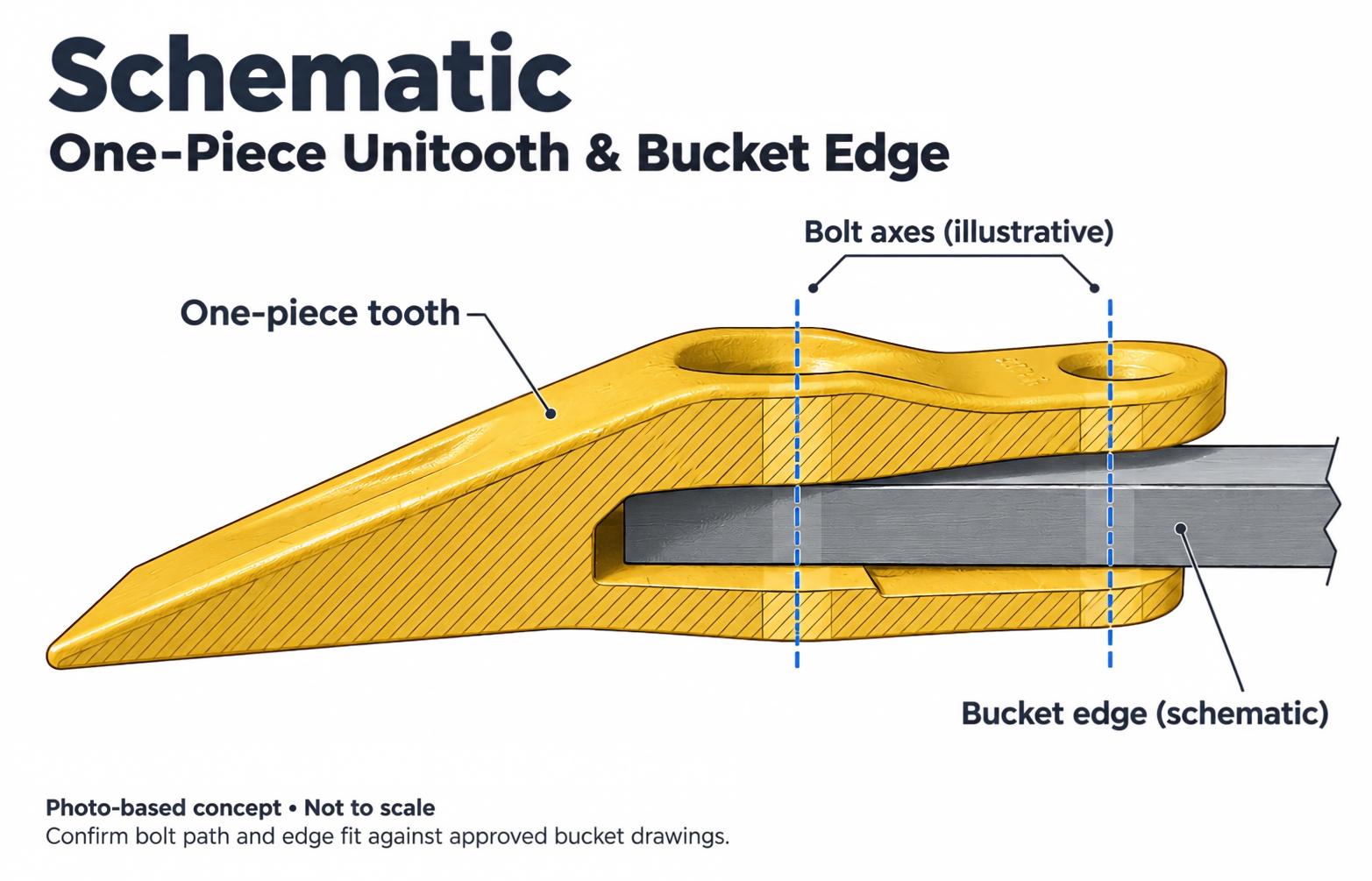
Published Caterpillar and CTP application references include IT28F, 928G, 920, 924F, 936F and 953. These references are useful starting points for a 1U1857 fitment check, rather than a guarantee covering every bucket installed on those machines.
If you are sourcing bucket teeth for an IT28F or 928G, record the machine serial number and identify the bucket currently fitted. Include its assembly number where available, together with details of previous bucket or cutting-edge replacements.
A replacement bucket may use a different tooth arrangement. Similarly, a repaired or renewed base edge needs to be checked against the intended mounting interface. If the existing part number is unreadable, provide photographs of the complete bucket, the mounting area and the removed tooth. Use those records alongside measurements, rather than accepting a match based only on appearance.
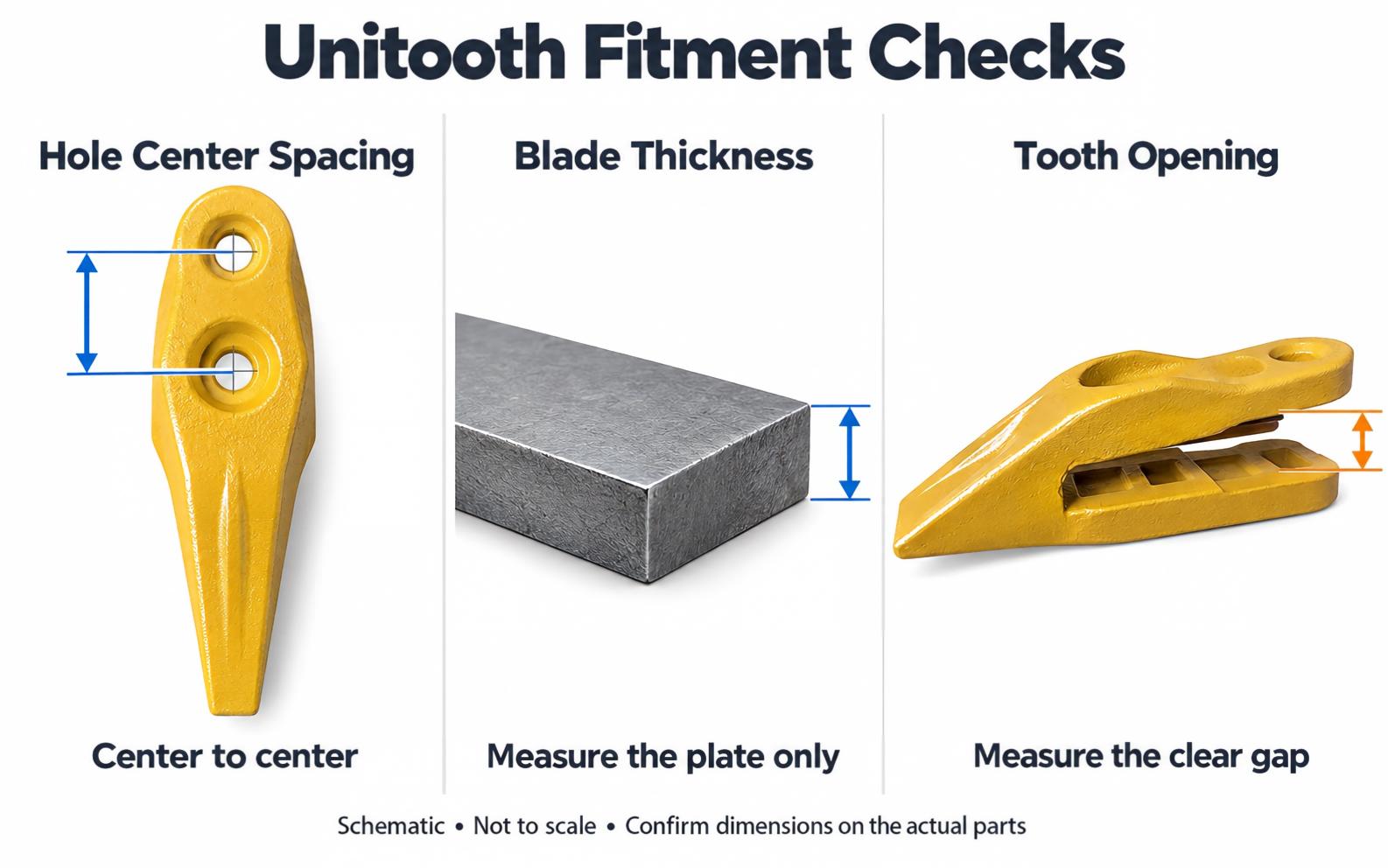
The most useful dimensions describe the connection to the bucket. Public listings do not provide one consistently defined specification for every aftermarket version, so request a drawing for the actual part being quoted.
Check | What to confirm |
Bucket lip thickness | Measure the base edge at the mounting area and identify any additional wear plates. |
Tooth opening | Compare the internal opening and seating surfaces with the bucket edge profile. |
Bolt hole spacing | Use center-to-center measurements with a clearly marked reference view. |
Hole geometry | Check hole count, diameter, shape and bolt-head seating details. |
Mounting profile | Compare the upper and lower mounting sections, contact faces and nearby clearances. |
Overall envelope | Check length, width and height against the correct drawing, allowing for wear on the old tooth. |
Do not treat a supplier’s “lip thickness” value as automatically identical to the tooth opening. Confirm what each dimension represents. Keep units consistent and ask for tolerances where they affect assembly.
An old tooth is useful identification evidence, but wear can change its outline and mounting features. Record measurements from the bucket as well as the removed part. Where possible, compare them with the original bucket specification or an approved reference sample. Resolve discrepancies before placing a bulk order.
Need help preparing a fitment inquiry? Send YASSIAN your existing tooth photographs, bucket details and available measurements so the information can be reviewed before quotation.
The published unitooth guidance concerns general applications where breakage is not the main concern. Do not assume that a compatible mounting pattern makes this design suitable for every abrasive or high-impact job. Tell the supplier what material is handled and whether the current problem is gradual wear, cracking, loose hardware or loss of teeth.
The following checks are general maintenance guidance. With the equipment safely isolated and the bucket supported according to its service instructions, inspect the working end, mounting sections and bucket edge. Look for cracks, uneven wear, distorted seating areas, damaged fasteners and movement at the connection.
The replacement decision should follow the applicable wear limits and maintenance instructions. Repeated loosening or damage deserves investigation before another tooth is installed. A new tooth alone will not correct an unsuitable or damaged mounting interface. Record photographs and operating conditions so the cause can be assessed alongside replacement selection.
When evaluating a 1U1857 supplier, compare the documented offer. Request the part drawing or dimensional inspection record, the product identification method and confirmation of what is included in the quoted price.
Material grade, hardness and heat treatment should be supported by records applicable to the offered product. Another manufacturer’s catalog values do not verify the replacement being supplied. Avoid treating paint color, casting appearance or a stated weight as proof of material performance.
For 1U1857 bolts and nuts, confirm the hardware specification against the relevant assembly. A quotation should distinguish tooth-only supply from a package containing fasteners. Agree on quantities, packaging, inspection requirements and delivery terms in writing. Use the applicable service procedure for installation and tightening requirements; a general sales listing is not an installation specification.
Send the following information with an RFQ:
· Required reference number and photographs of any legible markings.
· Machine model, serial number and bucket assembly identification.
· Tooth position and quantity for each position.
· Bucket lip measurements, tooth opening and bolt hole details.
· Photographs of the complete bucket and mounting surfaces.
· Existing hardware references and whether new fasteners are required.
· Working material, operating conditions and the reason for replacement.
· Order quantity, destination, packaging needs and requested delivery date.
For distributors purchasing for several customers, separate each configuration in the inquiry. Keep the confirmed drawing, photographs and supply scope with the quotation so repeat orders use the same specification.
YASSIAN is a China-based factory supplier of aftermarket bucket teeth, adapters, cutting edges and related construction machinery wear parts. We welcome inquiries from overseas distributors, importers, contractors and equipment maintenance teams.
Whether you need replacements for a particular bucket or are preparing a stock order, send us your 1U1857 reference, machine and bucket details, product photographs, mounting measurements and required quantity. Please also specify your destination and whether the quotation should include matching bolts and nuts.
We can review your inquiry, clarify the information needed for compatibility confirmation and discuss the proposed supply scope before quotation.
Contact YASSIAN with your part details to request a compatibility review and quotation.

