

- All
- Product Name
- Product Keyword
- Product Model
- Product Summary
- Product Description
- Multi Field Search
Views: 3 Author: Site Editor Publish Time: 2026-09-10 Origin: Site
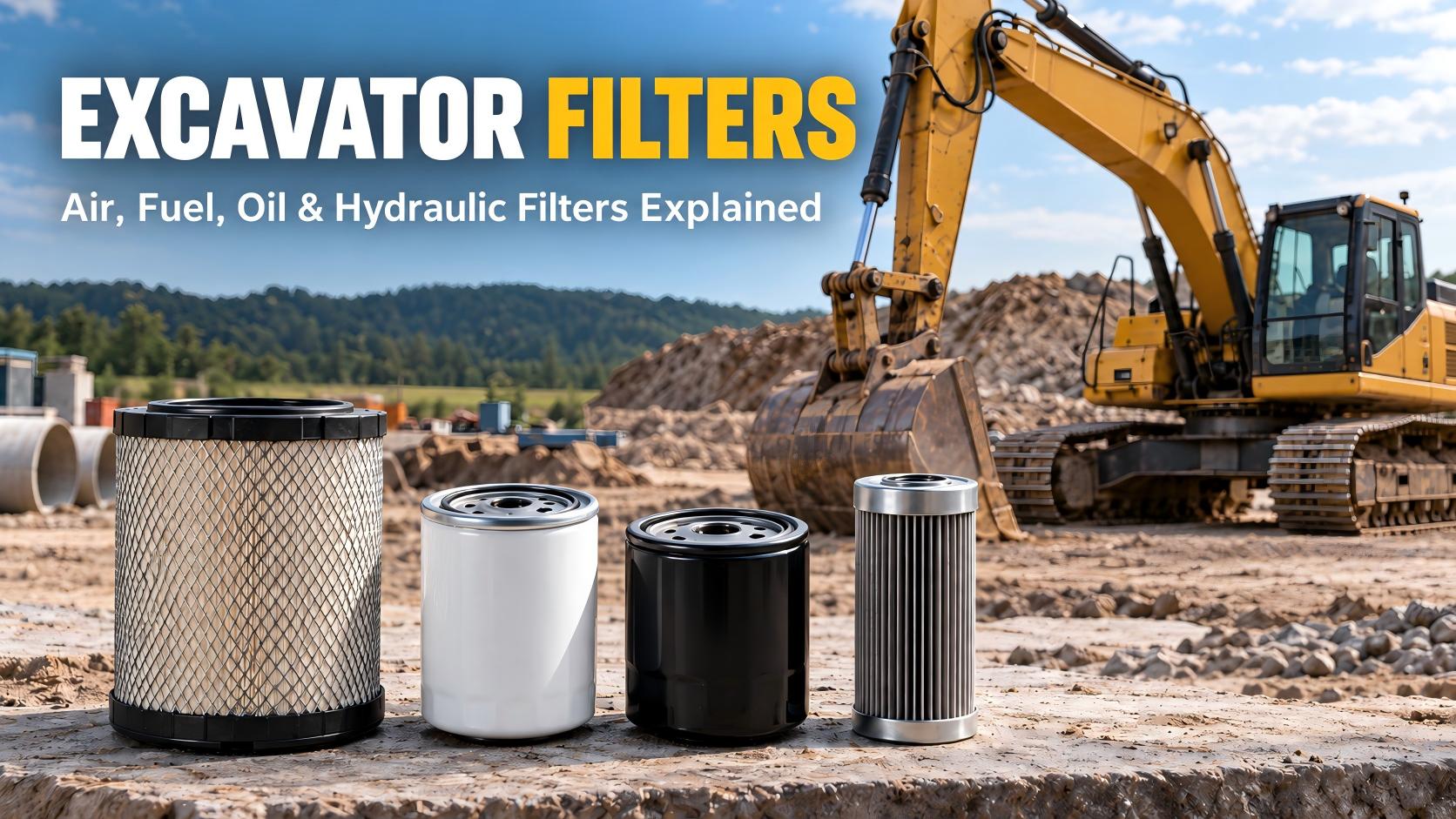
Excavators operate in dusty and demanding environments where air, fuel, engine oil and hydraulic fluid can all be exposed to contamination. That is why modern machines rely on several different excavator filters, rather than one universal filtration component.
The most common types include the excavator air filter, excavator fuel filter, excavator oil filter and excavator hydraulic filter. Many machines also use a fuel water separator as part of the fuel system.
Understanding what each filter does, how they differ and how to identify the correct replacement can help equipment owners, distributors and parts buyers reduce compatibility mistakes and make more informed purchasing decisions.
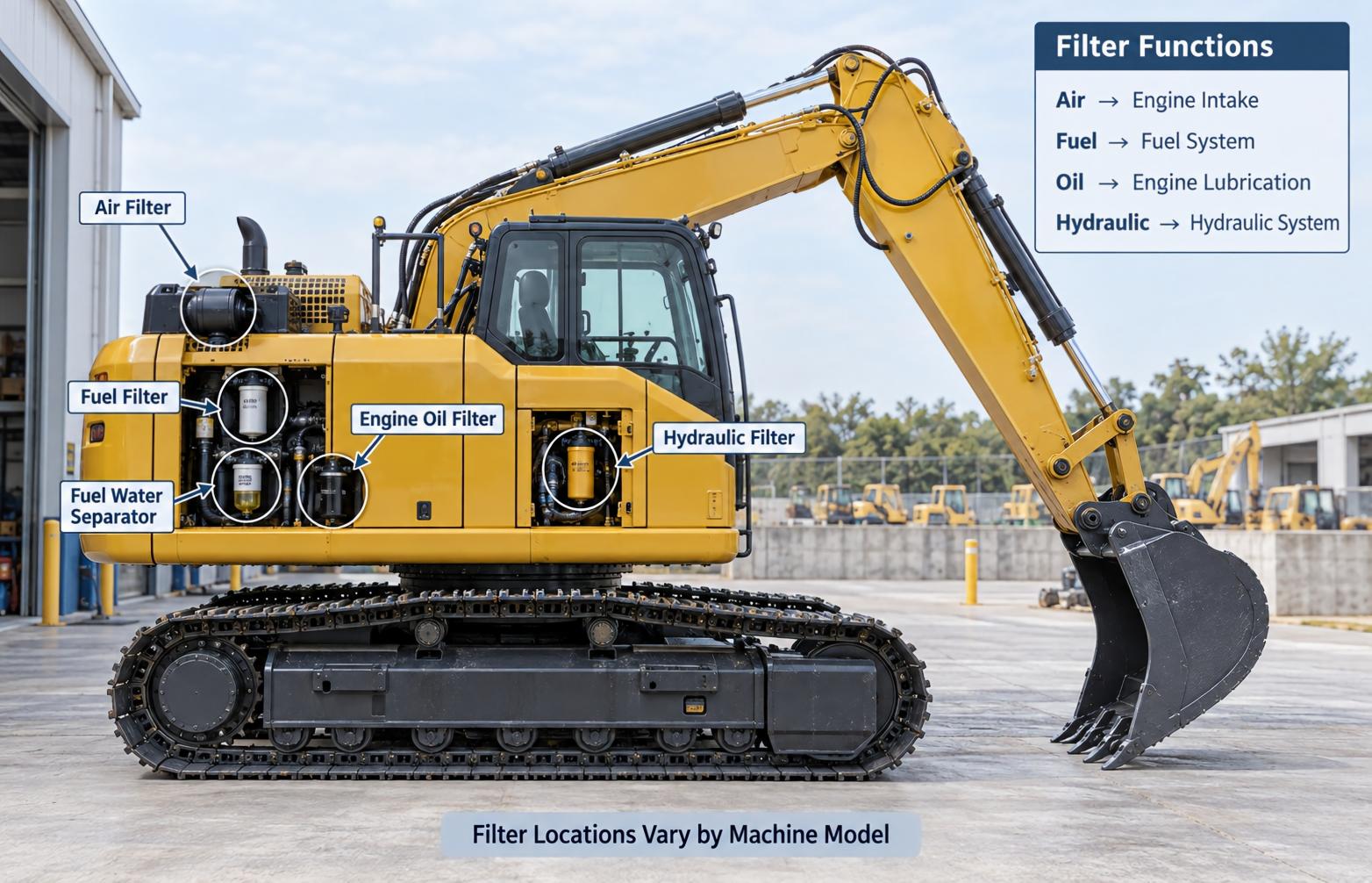
A typical excavator may use several filters depending on its engine and hydraulic-system design.
The main types include:
l Air filter for the engine intake system
l Fuel filter for the diesel fuel system
l Fuel water separator for separating water from fuel
l Oil filter for the engine lubrication system
l Hydraulic filter for the hydraulic circuit
The uploaded production document shows several filter categories used for engines and construction machinery and also describes the general structure of fuel-water separators, diesel filters and oil filters.
The exact filter arrangement varies by machine, engine and application, so filters should not be selected by appearance alone.
Filter Type | Main System | Main Function |
Excavator Air Filter | Engine Intake | Helps remove airborne dust and particles |
Excavator Fuel Filter | Fuel System | Helps remove contaminants from diesel fuel |
Fuel Water Separator | Fuel System | Helps separate water from fuel |
Excavator Oil Filter | Lubrication System | Filters contaminants from engine oil |
Excavator Hydraulic Filter | Hydraulic System | Filters contamination from hydraulic fluid |
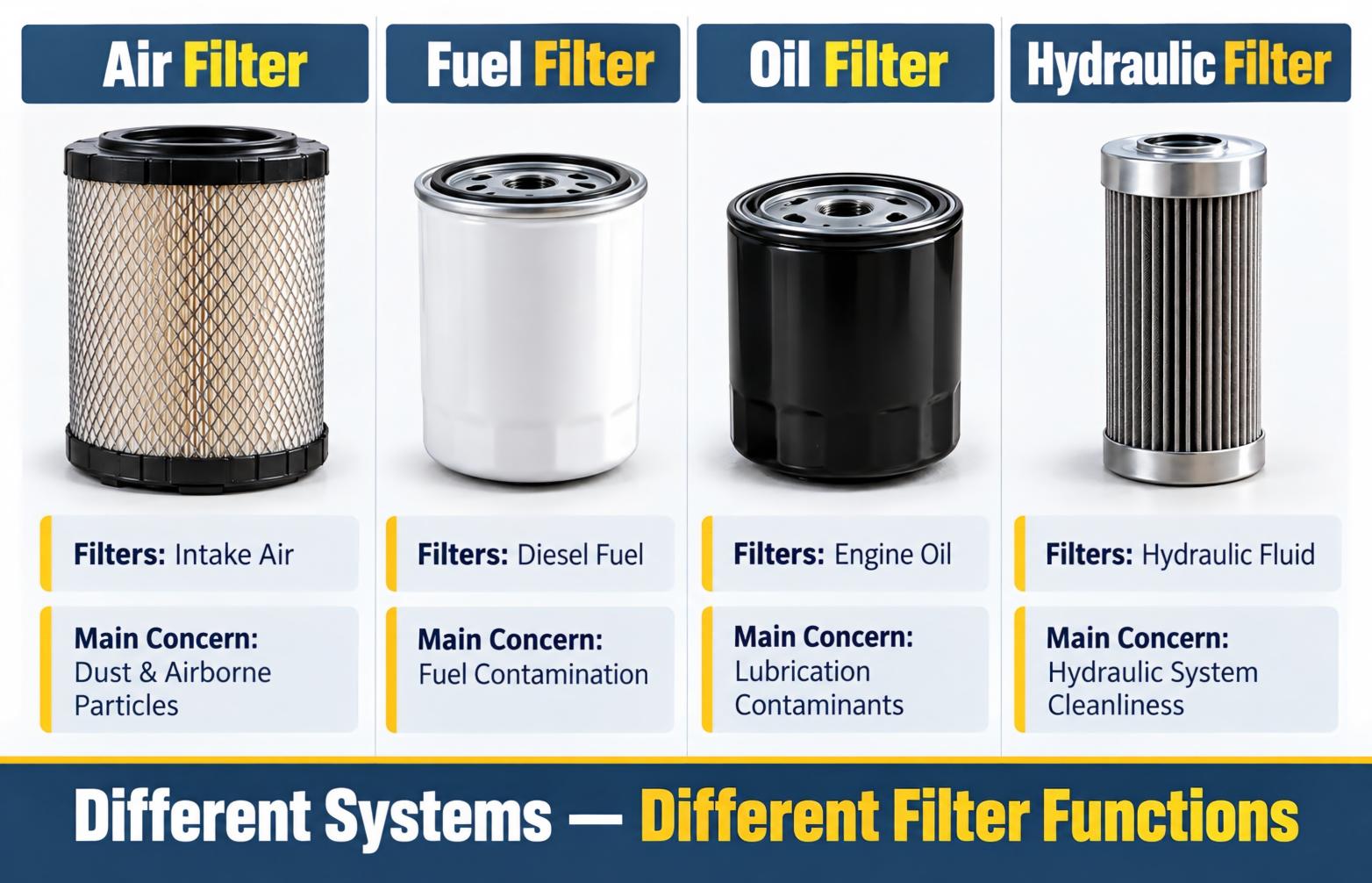
These heavy equipment filters work in different systems, even when some of them have a similar external shape.
The excavator air filter is part of the engine air-intake system. Its main purpose is to help prevent airborne contaminants from entering the engine with the intake air.
This is especially important because excavators often operate around:
l Dust
l Sand
l Soil
l Fine construction debris
A typical air filter element may include filter media, inner and outer supporting mesh, upper and lower end caps, and sealing or bonding areas.
Your document shows that the air filter production process includes filter paper processing, supporting mesh production, end-cap preparation and final assembly.
The filter paper process includes cutting and pleating, low-temperature curing, joining the two ends and securing the formed element.
This helps explain why two air filters that look similar externally may still have different internal structures.
The excavator fuel filter is used in the diesel fuel system. Its role is to help remove solid contaminants from the fuel before it moves through the rest of the system.
Possible contamination may come from storage, refueling, rust or deposits inside the fuel tank.
Fuel filters are commonly available in different designs, including spin-on and cartridge types.
A spin-on fuel filter combines the filter element and outer housing into one replaceable unit, while a cartridge design uses a replaceable internal element inside a separate housing.
The uploaded document includes production information for spin-on filters, including the threaded cover plate, filter element, outer housing and finished assembly.
Because filter designs differ, the correct type should always be confirmed before ordering.
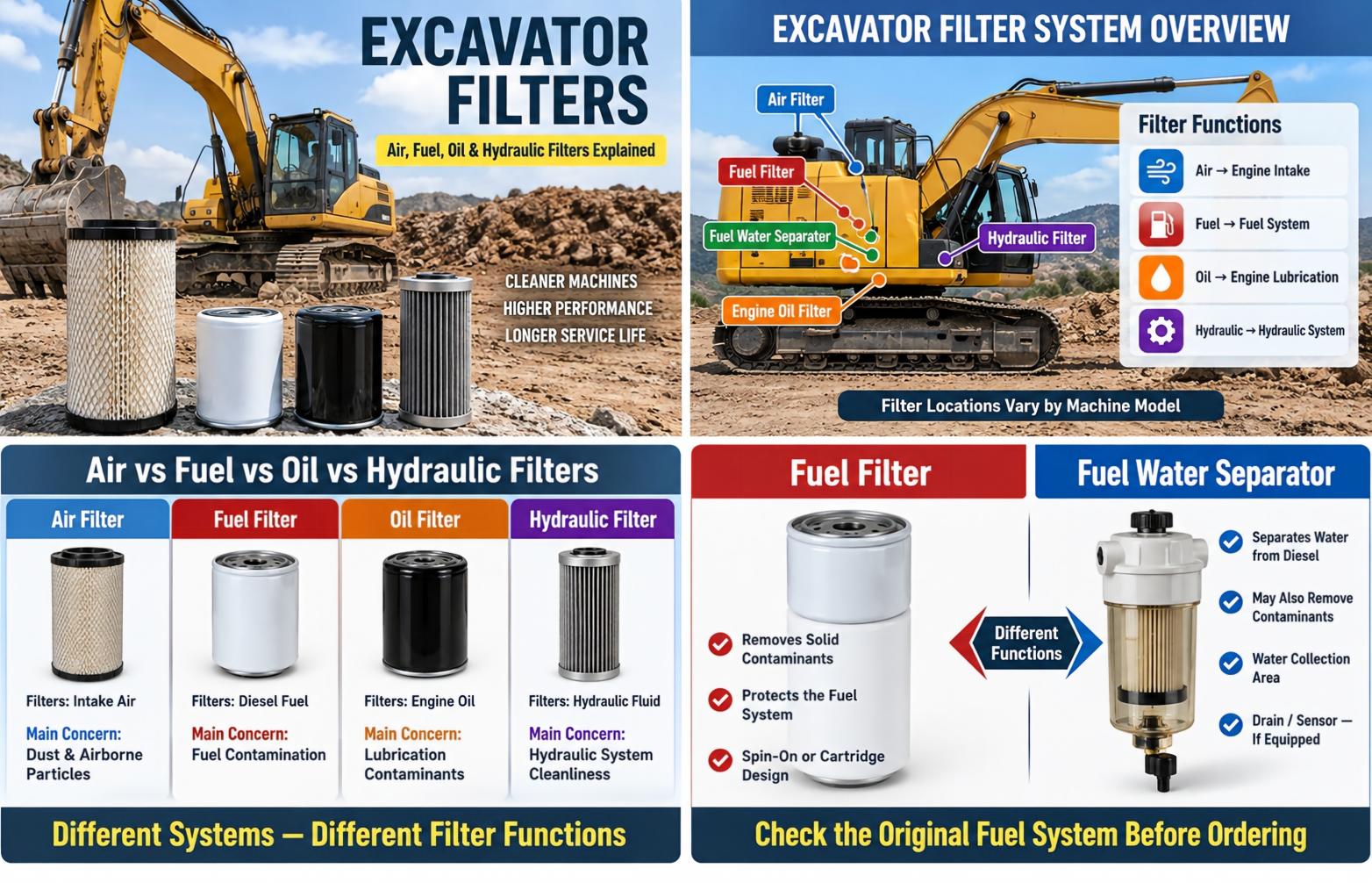
A fuel water separator is also part of the fuel system, but it should not automatically be treated as the same product as a fuel filter.
A fuel filter mainly helps remove solid contamination, while a fuel water separator is primarily designed to help separate water from diesel fuel.
Depending on the machine, these functions may be provided by separate components or combined in one assembly.
A typical fuel-system layout may be:
Fuel Tank → Primary Filter / Water Separator → Secondary Fuel Filter → Fuel Pump → Injectors
The actual arrangement can vary by machine.
Some separator designs may include a collection bowl, drain area or sensor connection, depending on the specific product.
The excavator oil filter operates in the engine lubrication system.
Engine oil circulates through the engine and may carry contaminants produced during normal operation. The oil filter helps remove these contaminants from the circulating lubricant.
The uploaded document describes the general components of oil filters, diesel filters and fuel-water separators as including:
l Connecting plate
l Inner sealing ring
l Filter element
l Outer housing
l Spring in most designs
The same document also shows the production process for spin-on filter components such as the threaded plate, filter element, housing and final assembly.
This means internal construction should be considered when comparing replacement filters.
The excavator hydraulic filter helps remove contamination from hydraulic fluid within the machine’s hydraulic system.
Depending on the machine design, hydraulic filters may be located in different parts of the circuit, such as the return line, suction side, pressure line or pilot circuit.
Your uploaded document does not provide detailed manufacturing information for hydraulic filters, so specific internal construction should be confirmed from the relevant product or manufacturer data rather than assumed from the other filter types shown in the file.
The simplest way to understand the difference is by the fluid or medium each filter handles:
Air Filter — Intake Air
Fuel Filter — Diesel Fuel
Oil Filter — Engine Oil
Hydraulic Filter — Hydraulic Fluid
Their functions are different, and so are many aspects of their internal design.
For this reason, similar appearance does not mean interchangeability.
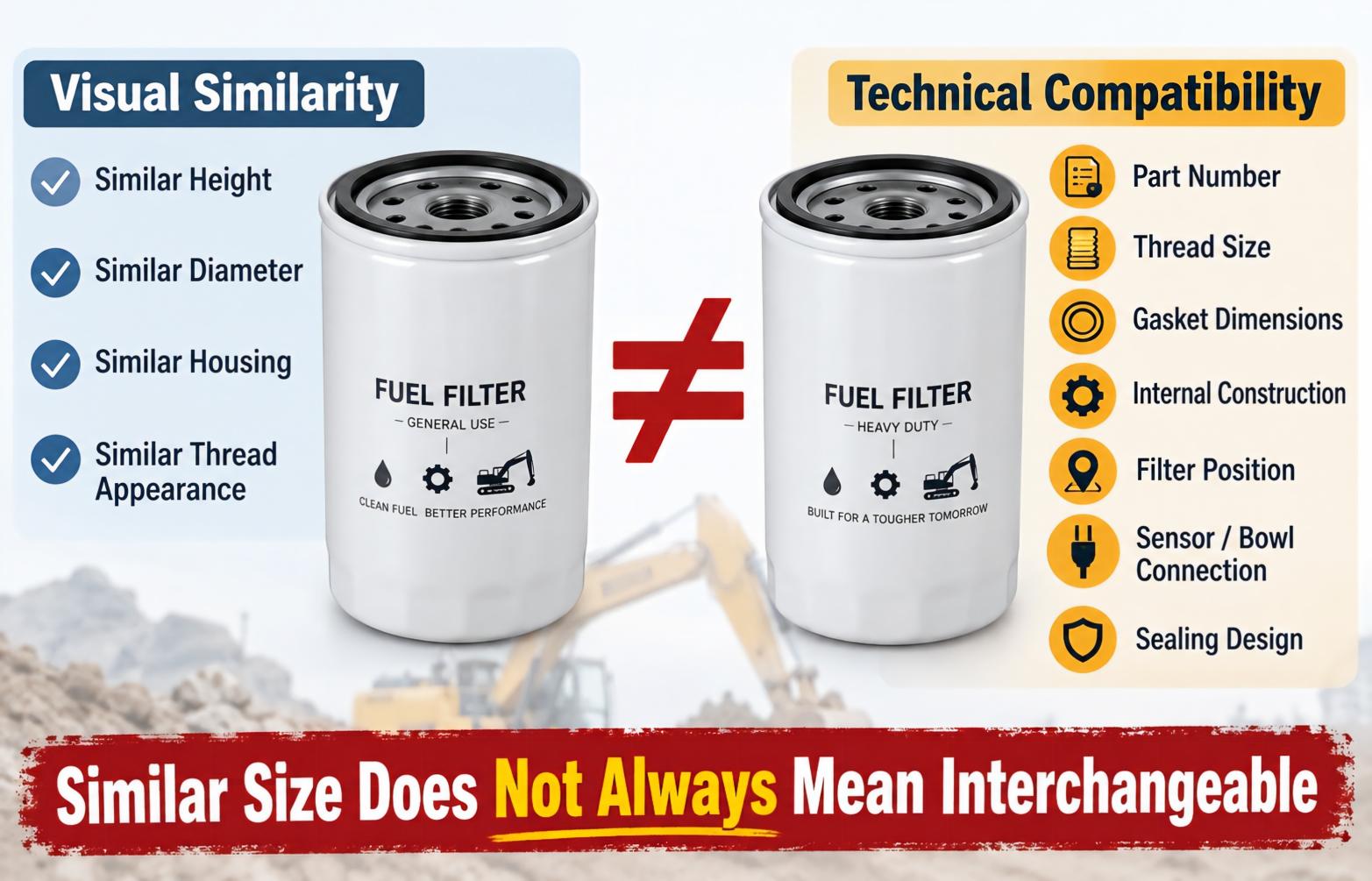
Not automatically.
Two filters may appear similar in:
l Height
l Diameter
l Thread size
l Housing shape
But they may still differ in:
l Internal construction
l Sealing design
l Filter position
l Connection type
l Bowl or sensor arrangement
l Application
This is why excavator filter replacement should be based on technical identification rather than visual comparison alone.
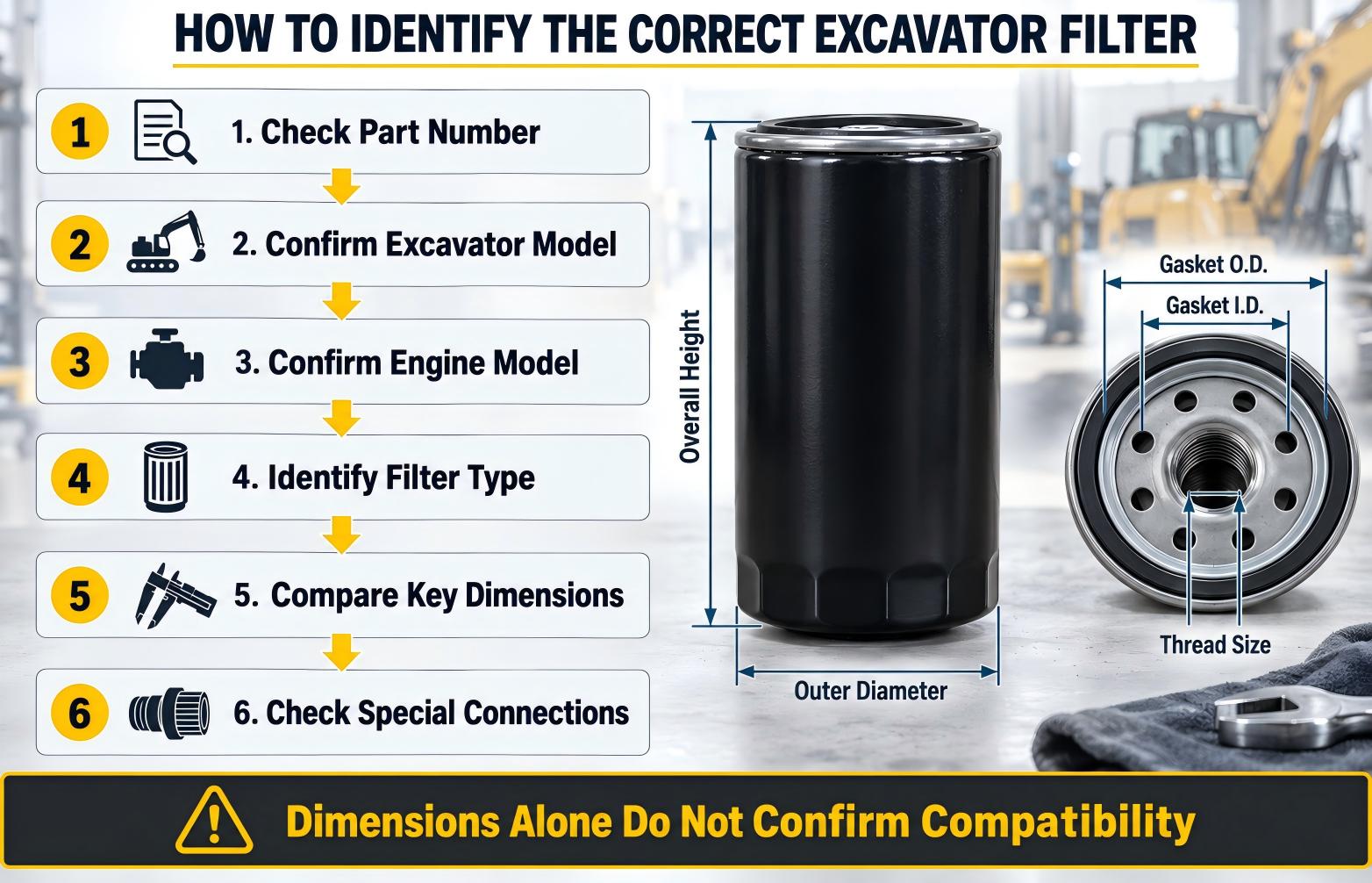
Before ordering, confirm as much application information as possible.
The original part number is usually the best starting point.
Do not rely only on the equipment brand.
The same excavator model may use different engine configurations.
Confirm whether it is an air, fuel, oil, hydraulic filter or fuel water separator.
Useful measurements may include:
l Overall height
l Outer diameter
l Thread size
l Gasket outer diameter
l Gasket inner diameter
However, dimensions alone do not confirm compatibility.
Depending on the filter, also check for:
l Water collection bowl
l Drain connection
l Sensor connection
l Cartridge or spin-on construction
l Sealing structure
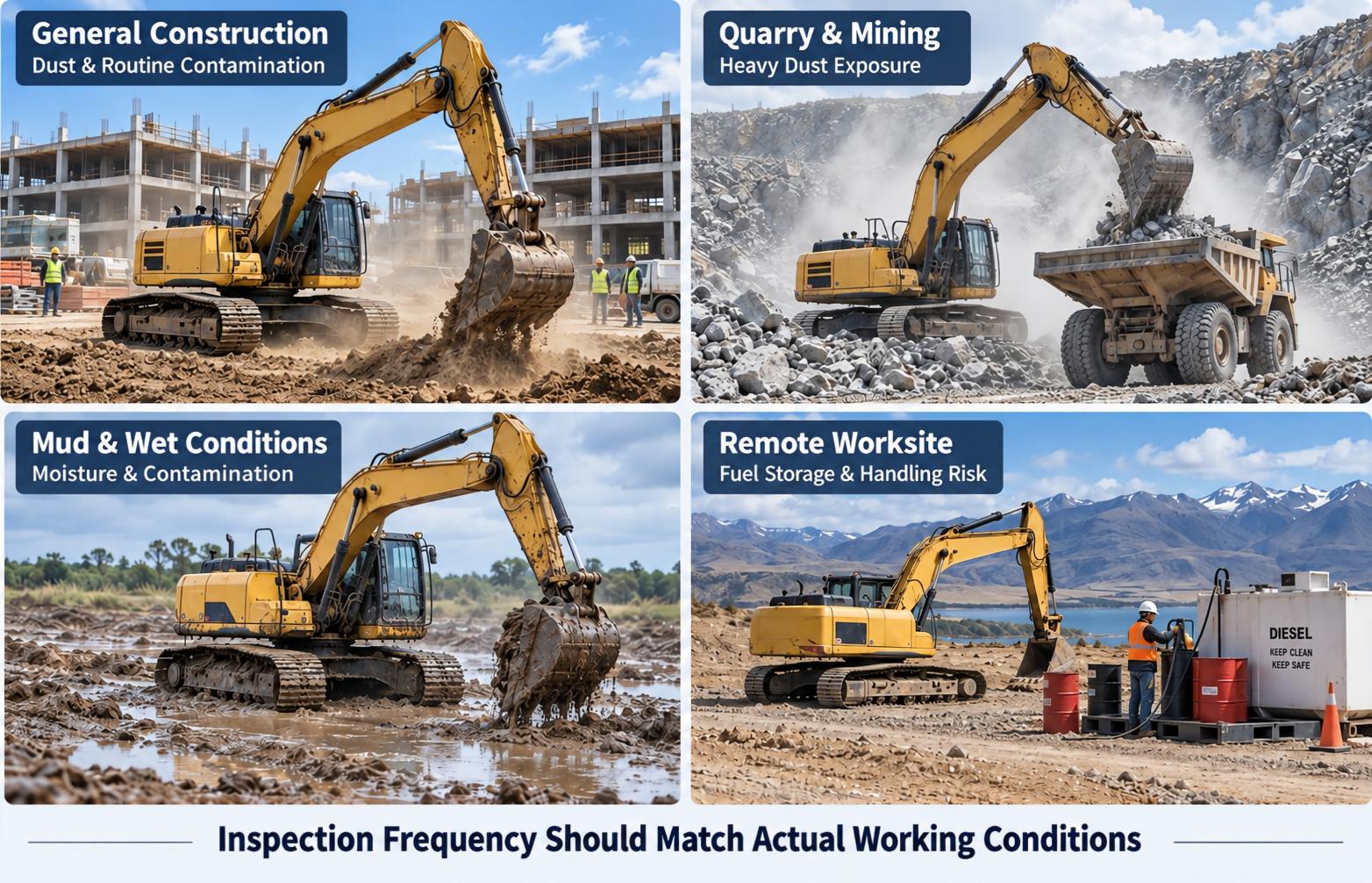
Working environment can influence how quickly filters become contaminated.
General Construction: routine dust and airborne contamination.
Quarry and Mining: heavier dust exposure and demanding operation.
Mud and Wet Conditions: greater moisture and contamination exposure.
Remote Worksites: fuel storage and handling conditions may increase contamination risk.
Inspection and replacement intervals should follow the equipment manufacturer’s maintenance recommendations and actual working conditions.
For distributors, importers and equipment parts buyers, accurate identification is essential.
Useful information includes:
l Part number
l Excavator model
l Engine model
l Filter type
l Cross-reference number
l Dimensions
l Required quantity
l Packaging requirements
l Photos of the original filter
Providing complete application information helps reduce incorrect cross-referencing and unnecessary returns.
Filter quality is not determined by external appearance alone.
For air filters, your document shows manufacturing steps such as filter-media pleating, mesh forming, end-cap production, assembly, curing and inspection.
For spin-on fuel and oil filters, it shows production of the threaded plate, filter element, outer housing and final assembly.
Consistent manufacturing and inspection help maintain product consistency from one production batch to another.
Different excavator filters protect different machine systems.
The excavator air filter handles intake air, the excavator fuel filter helps filter diesel fuel, the excavator oil filter works with engine lubricating oil, and the excavator hydraulic filter helps keep hydraulic fluid clean. A fuel water separator serves another important role by helping separate water from fuel.
For replacement or bulk sourcing, buyers should confirm the part number, excavator model, engine model, filter type and required quantity before ordering.
The key point is simple:
Similar-looking filters are not always interchangeable. Correct identification is just as important as product quality.

