Views: 47 Author: YASSIAN-Envy Publish Time: 2025-10-29 Origin: Site
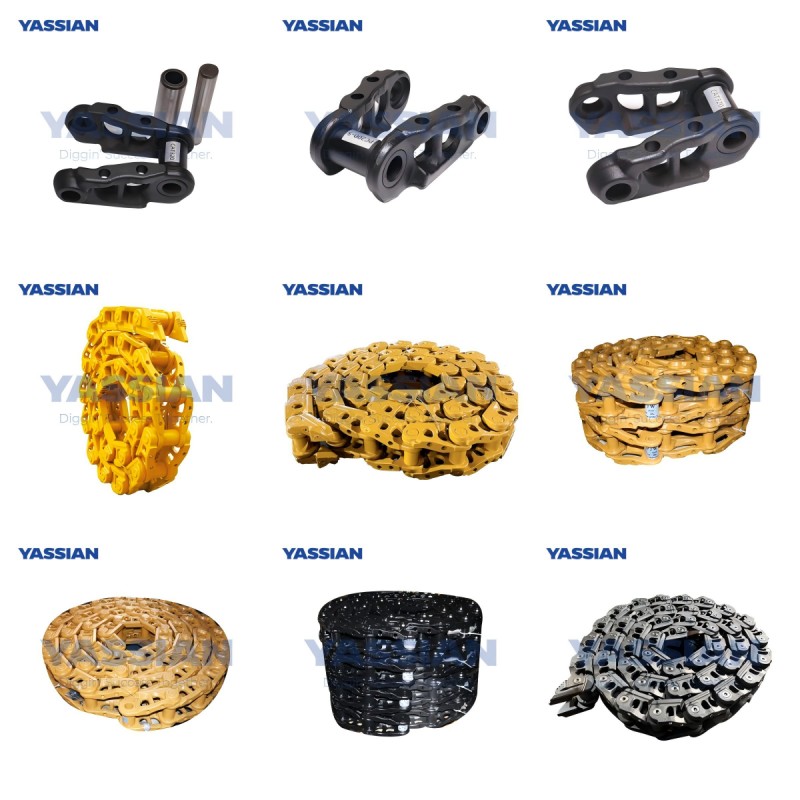
Track chains belong to the undercarriage of various types of heavy machinery. Their main function is to connect the forward movement produced by the pedals to the wheels, which have driving characteristics, in order to cause continuous forward motion. They are used in heavy tracked machinery such as excavators and bulldozers.
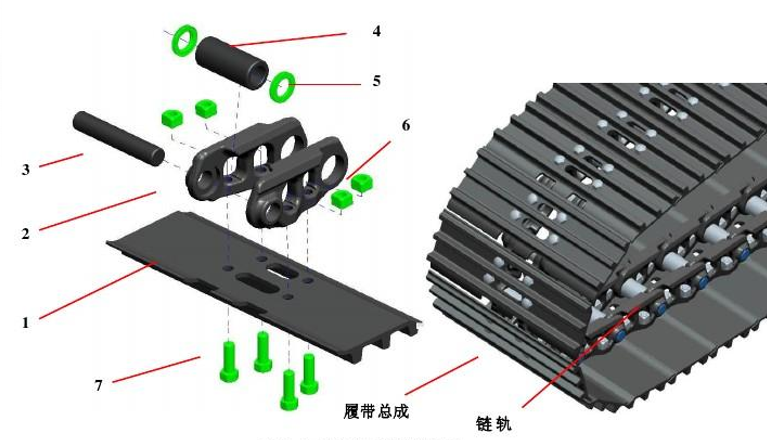
The drive wheels of heavy tracked machinery are linked and mesh with sliding bearings that cause the links to articulate with each other, forming chains that prevent the wheels from resting directly on the ground. In the outer zone of the link, a shoe is connected by screws to support the machine and provide grip with the ground. The shoes generally have claws to provide optimal grip, and all the weight rests on the chains. This type of machinery is ideal for operating on all types of terrain.
When the driving wheels rotate, the chains produce the movement of the machine thanks to their union. The driving wheels' teeth collect the links that return to the ground on the guide wheels, which guide the chains back to the ground and generate continuous forward movement.
LINK ASSEMBLY:
There are two types of link mount:
– Master link type
The link is divided into sections and connected using bolts. This type is recommended for the track shoe due to its ease of mounting.
– Master pin type:
The assembly requires the pin to be removed and replaced. The master pin is bevelled and the master bushing is smaller than the regulating bushing so that it can easily be removed from its usual position between the links.

LINK:
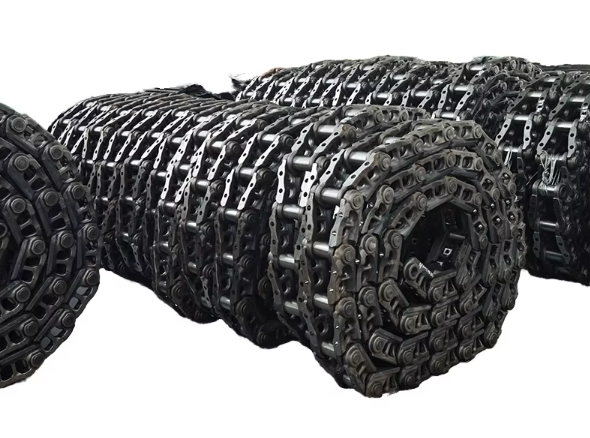
The links generally have an unusual shape. The most important area of the link is the part that will be in contact with the ground and the rolling surface. This is because it needs to have properties that prevent it from wearing out too quickly.
Due to the nature of how the machinery operates, the link is subject to roughing and stress when in contact with the ground. It must also withstand high loads from the rollers when the machine moves forwards and backwards.
To extend the service life of the links, they are manufactured from high-strength materials in the rolling surface area to meet the most critical requirements. The link assembly, bushing and pin are inserted into the respective opposite sides and ends. A press fit is employed to ensure that the pin and bushing do not escape from the link. The contact area of the link with the ground is larger because it is under pressure, ensuring a tighter fit. To improve its hardness properties, the surface subjected to greater stress undergoes heat quenching treatment to ensure that wear is not uneven.
BUSHING:
The bushing needs to have high wear resistance and tolerance and resistance to fatigue to withstand the impacts of the sprocket. Due to its operation, the interior and exterior surfaces are subjected to friction and wear. A heat treatment is therefore carried out, during which the piece is tempered to increase its durability.
The external surface of the bushing usually wears out faster than the internal surface because it is in contact with the sprocket surface, which causes hammering during operation. Additionally, particulate earth material can generate much greater wear. Additional wear occurs between the pin and the inner surface of the bushing.
PIN:
It is required to withstand the constant tensile stresses of the links and to be highly resistant to wear. It is a very important component as it joins the links together. Due to the weight of the equipment, a high bending force is produced, which is why the pin is designed to be highly resistant to fatigue. There are two kinds of pin: the regular pin and the replacement pin, also known as the master pin. The regular pin has a larger diameter than the master pin.
SEAL:
The lifetime of the oil-lubricated track depends on the type of seal because, if the seal breaks or fails, the oil is released, allowing sand to enter the bushing and accelerate the wear of both the bushing and the pin. As the seal wears, the sealing stress begins to decrease, causing the inside of the bushing and pin to wear out more rapidly due to internal oil leaks and ingress of sand particles.