Views: 87 Author: Envy Publish Time: 2025-12-31 Origin: Site
Motor Grader Blade And End Bit:
Motor grader blades and end bits are critical components that directly impact the performance, efficiency, and cost-effectiveness of grading operations. Choosing the right cutting edges requires careful consideration of multiple factors, including material composition, dimensions, blade type, and application requirements. This comprehensive guide will help you make informed decisions when selecting motor grader blades and end bits for your specific needs.
Ⅰ. Material Selection
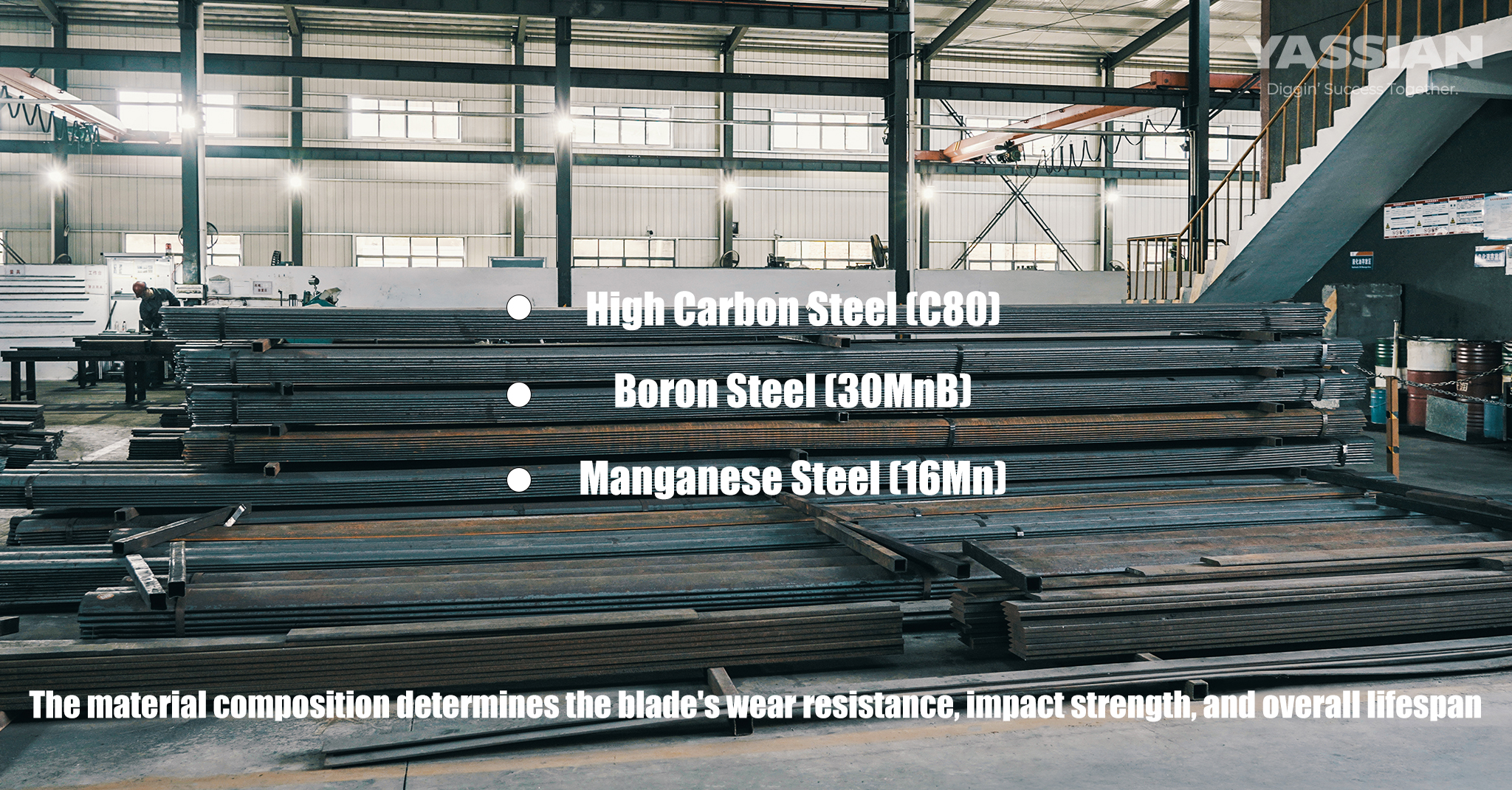
The Motor grader blades and end bits material composition determines the blade's wear resistance, impact strength, and overall lifespan:
High Carbon Steel (C80)
• Hardness: HB280-320
• Best for: General grading applications with moderate abrasion
• Cost-effective option for standard conditions
Boron Steel (30MnB)
• Hardness: HB320-360 or HB440-520
• Best for: High abrasion conditions and extended service life
• Offers superior wear resistance compared to standard carbon steel
Manganese Steel (16Mn)
• Hardness: HB280-320
• Best for: End bits requiring impact resistance
• Provides excellent toughness for high-impact applications
Carbide-Tipped Blades
• Hardness: Significantly higher than steel
• Best for: Extreme abrasion environments
• Can exceed 1,200 hours of service life
• 2-3x the cost of standard blades but offers superior performance
Ⅱ. Blade Types and Configurations
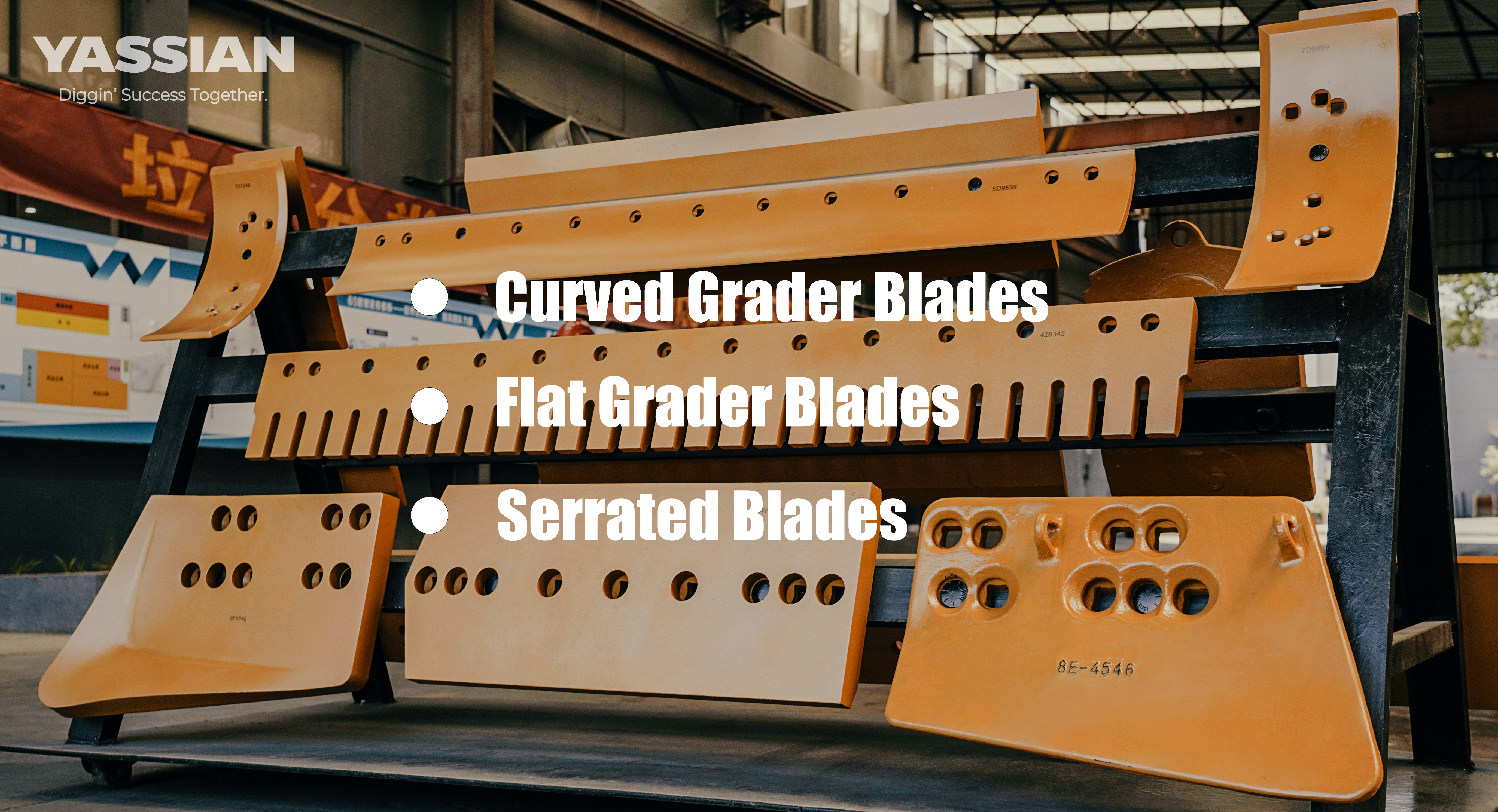
---Curved Grader Blades
• Thickness: 13-25mm
• Width: 152-203mm
• Features: Double Bevel Curved (DBC) design
• Advantages: Better penetration and material flow, ideal for creating smooth surfaces
• Angle of attack: 60-90 degrees for optimal material movement
---Flat Grader Blades
• Thickness: 16-75mm
• Width: 203-406mm
• Features: Double Bevel Flat (DBF) design
• Advantages: High impact resistance, suitable for general grading tasks
• More durable but less efficient at material movement than curved blades
---Serrated Blades
• Available in both curved and flat configurations
• Advantages: Excellent for rocky or frozen ground conditions
• Creates better traction and cutting action in difficult materials
Ⅲ. Dimensional Specifications
Thickness Options
• 1/2" (13mm) - Light duty applications
• 5/8" (16mm) - Standard duty
• 3/4" (19mm) - Heavy duty
• 1" (25mm) - Extra heavy duty
Width Options
• 6" (152mm) - Standard curved blade
• 10" (254mm) - Wide curved blade
• 11" (280mm) to 16" (406mm) - Flat blade widths
Ⅳ. Application Considerations
---Project Type
• Road construction: Require precise grading and smooth surfaces
• Snow removal: Need impact resistance and durability
• Mining operations: Demand extreme abrasion resistance
• Agricultural grading: Require versatility and cost-effectiveness
---Material Being Graded
• Soil and dirt: Standard carbon steel blades
• Rocky terrain: Serrated or carbide-tipped blades
• Frozen ground: High impact resistance materials
• Abrasive materials: Boron steel or carbide blades
---Working Conditions
• Moderate conditions: High carbon steel
• High abrasion: Boron steel
• Extreme conditions: Carbide-tipped blades
• High impact: Manganese steel end bits
Ⅴ. Machine Compatibility
Ensure the blades and end bits match your motor grader's specifications:
• Check OEM part numbers
• Verify bolt patterns and mounting configurations
• Confirm curvature radius (±2mm tolerance)
• Ensure compatibility with leading brands: Caterpillar, Komatsu, Volvo, John Deere, etc.
Ⅵ. Performance Metrics
Wear Resistance
• Standard carbon steel: 400-500 operating hours
• Boron alloy steel: 700-900 hours
• Carbide-tipped: 1,200+ hours
• Target >600 hours for moderate conditions
Impact Resistance
• Minimum Charpy V-notch rating: 27 J at -20°C
• Essential for cold weather operations and rocky terrain
Cutting Efficiency
• ≤3 passes for grade accuracy within ±15mm
• Curved blades provide better penetration and material flow
Ⅶ. Cost-Efficiency Analysis
Calculate cost per cubic yard moved, considering:
• Initial purchase price
• Estimated replacement frequency
• Downtime costs during changeovers
• Maintenance requirements
Cost Comparison
• Standard carbon steel: Most economical for general use
• Boron steel: 25-40% higher cost but 40-80% longer life
• Carbide-tipped: 2-3x cost but 2-3x lifespan in extreme conditions
Ⅷ. Quality Assurance
Certifications and Standards
• ISO 9001:2015 certification
• ASTM A572 Grade 65 compliance
• EN 10083 for European projects
Ⅸ. Maintenance and Inspection
Regular Inspection Schedule
• Every 50 operating hours: Check for edge wear exceeding 25% of original thickness
• Look for crack development near mounting holes
• Check for deformation beyond 3° from original curvature
Rotation Schedule
• Rotate blades every 200 operating hours
• Distribute wear evenly across the cutting edge
• Extend overall blade life
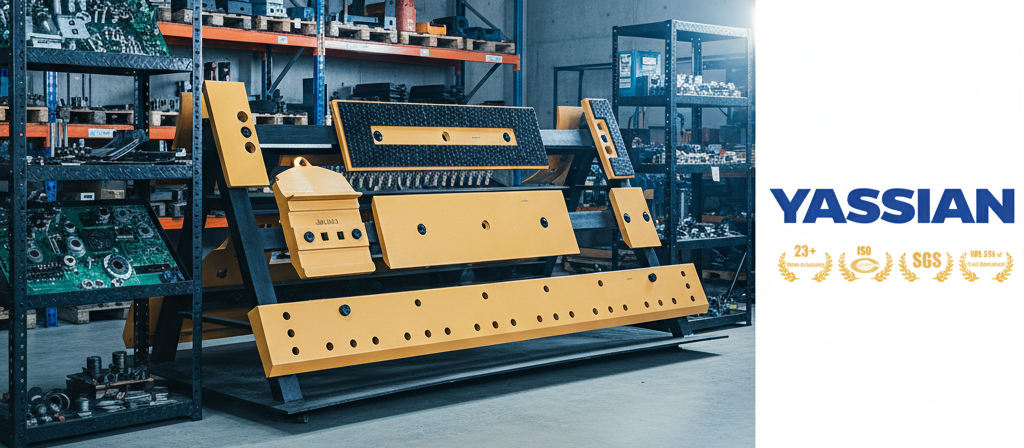
Ⅹ. About YASSIAN Motor Grader Blade and End Bit
• OEM fit or custom designed
• Grader blade: high carbon steel and heat treated boron steel available
• Grader end bit: heat treated manganese steel and heat treated boron steel available
• Curved grader blade: thickness from 13-25mm,width from 152-203mm
• Flat grader blade: thickness from 16-75mm,width from 203-406mm
• Serrated grader blade both curved and flat
• Provide Casting ripper shank and teeth.