
 |

| Quantity: | |
|---|---|
|
| |
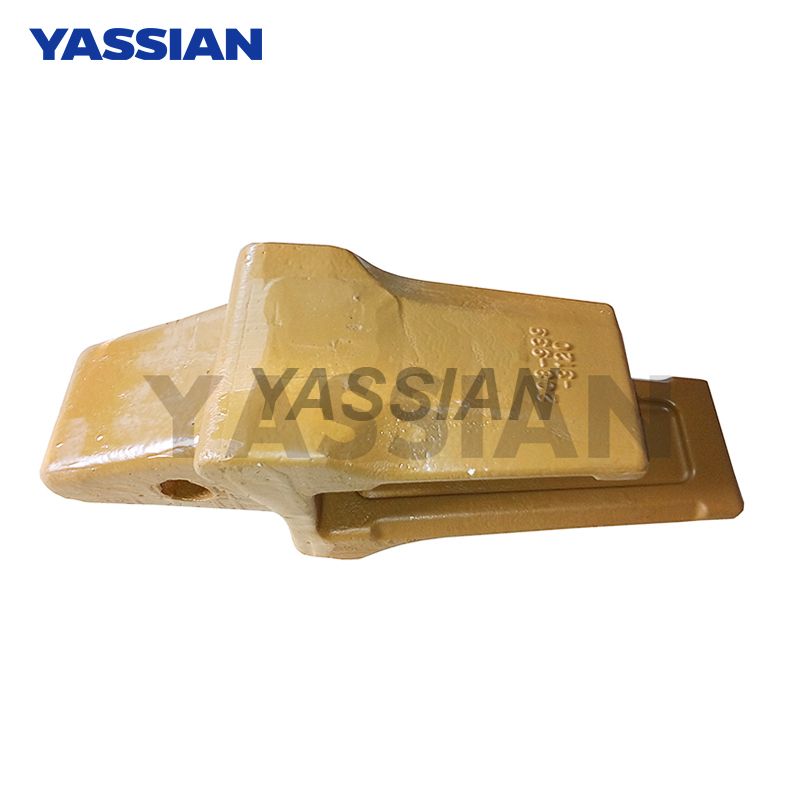
208-939-3120 208-934-7120
YASSIAN or Your's
How to choose the right pin material?
Selecting the appropriate pin material requires a comprehensive consideration of four core elements: working condition load, environmental corrosiveness, positioning accuracy, and maintenance frequency. The specific selection strategy is as follows:
1. Select materials based on the working conditions and loads
Heavy-load impact scenarios (such as construction machinery, mining equipment)
Alloy structural steel (such as 20CrMnTi) : After carburizing and quenching, the surface hardness is ≥58HRC, the core retains toughness, and the impact fatigue strength is increased by 30%.
High manganese steel (ZGMn13) : self-hardening of the surface under severe impact, specifically designed for extreme working conditions such as tank track pins.
Medium and low load scenarios
45 steel : low cost and easy to process. After quenching and tempering treatment, the hardness reaches HRC38-43, suitable for ordinary transmission pins.
Ii. Adaptability to environmental corrosiveness
Highly corrosive environment (chemical, Marine equipment)
Austenitic stainless steel : 304 stainless steel can withstand salt spray for more than 96 hours, and 316 stainless steel containing molybdenum has better resistance to acid and alkali corrosion.
Galvanized carbon steel : 40×40×3.75mm galvanized square pin salt spray resistance over 1000 hours, annual corrosion rate < 2μm.
Food/medical equipment
Grade A1 stainless steel : complies with food-grade anti-corrosion standards, surface electrolytically polished to Ra≤0.8μm.
Iii. Precision and Service Life Requirements
High-precision positioning pin
Bearing steel (GCr15) : after overall quenching, its hardness is HRC60-62, with excellent dimensional stability and resistance to micro-deformation.
Tungsten steel : It has better wear resistance than alloy steel and is used for precision mold positioning, with a 50% increase in service life.
Frequent disassembly and assembly scene
Elastic pin (rolled steel) : The longitudinal groove design reduces the requirement for hole accuracy and supports reuse.
Iv. Economic Balance Plan
Cost-sensitive : preferred 45 steel + surface hardened (HRC40-45)
Lightweight requirement : aluminum alloy pin + anodizing treatment, suitable for non-load-bearing structures
Selection process example :
Tower crane pin material selection → Heavy-load impact working conditions → Select 20CrMnTi carburized steel → Verify that the radial shear force is ≥800MPa
Seafood machinery sales → High salt spray environment → Select 316 stainless steel → Salt spray test ≥500 hours
How to choose the right pin material?
Selecting the appropriate pin material requires a comprehensive consideration of four core elements: working condition load, environmental corrosiveness, positioning accuracy, and maintenance frequency. The specific selection strategy is as follows:
1. Select materials based on the working conditions and loads
Heavy-load impact scenarios (such as construction machinery, mining equipment)
Alloy structural steel (such as 20CrMnTi) : After carburizing and quenching, the surface hardness is ≥58HRC, the core retains toughness, and the impact fatigue strength is increased by 30%.
High manganese steel (ZGMn13) : self-hardening of the surface under severe impact, specifically designed for extreme working conditions such as tank track pins.
Medium and low load scenarios
45 steel : low cost and easy to process. After quenching and tempering treatment, the hardness reaches HRC38-43, suitable for ordinary transmission pins.
Ii. Adaptability to environmental corrosiveness
Highly corrosive environment (chemical, Marine equipment)
Austenitic stainless steel : 304 stainless steel can withstand salt spray for more than 96 hours, and 316 stainless steel containing molybdenum has better resistance to acid and alkali corrosion.
Galvanized carbon steel : 40×40×3.75mm galvanized square pin salt spray resistance over 1000 hours, annual corrosion rate < 2μm.
Food/medical equipment
Grade A1 stainless steel : complies with food-grade anti-corrosion standards, surface electrolytically polished to Ra≤0.8μm.
Iii. Precision and Service Life Requirements
High-precision positioning pin
Bearing steel (GCr15) : after overall quenching, its hardness is HRC60-62, with excellent dimensional stability and resistance to micro-deformation.
Tungsten steel : It has better wear resistance than alloy steel and is used for precision mold positioning, with a 50% increase in service life.
Frequent disassembly and assembly scene
Elastic pin (rolled steel) : The longitudinal groove design reduces the requirement for hole accuracy and supports reuse.
Iv. Economic Balance Plan
Cost-sensitive : preferred 45 steel + surface hardened (HRC40-45)
Lightweight requirement : aluminum alloy pin + anodizing treatment, suitable for non-load-bearing structures
Selection process example :
Tower crane pin material selection → Heavy-load impact working conditions → Select 20CrMnTi carburized steel → Verify that the radial shear force is ≥800MPa
Seafood machinery sales → High salt spray environment → Select 316 stainless steel → Salt spray test ≥500 hours


